metadata
a minimalist, fast-paced board game.
Featured on the 2022 DAM Creative Showcase here
For my class on Digital Asset Management (DAM), we were tasked on either creating an infographic, TikTok, or board game that would educate others on different aspects of DAM. Since an infographic and TikTok were the more popular choices by the other students, I decided to tackle on making a board game that aims to inform players about metadata and its significance to digital asset management.
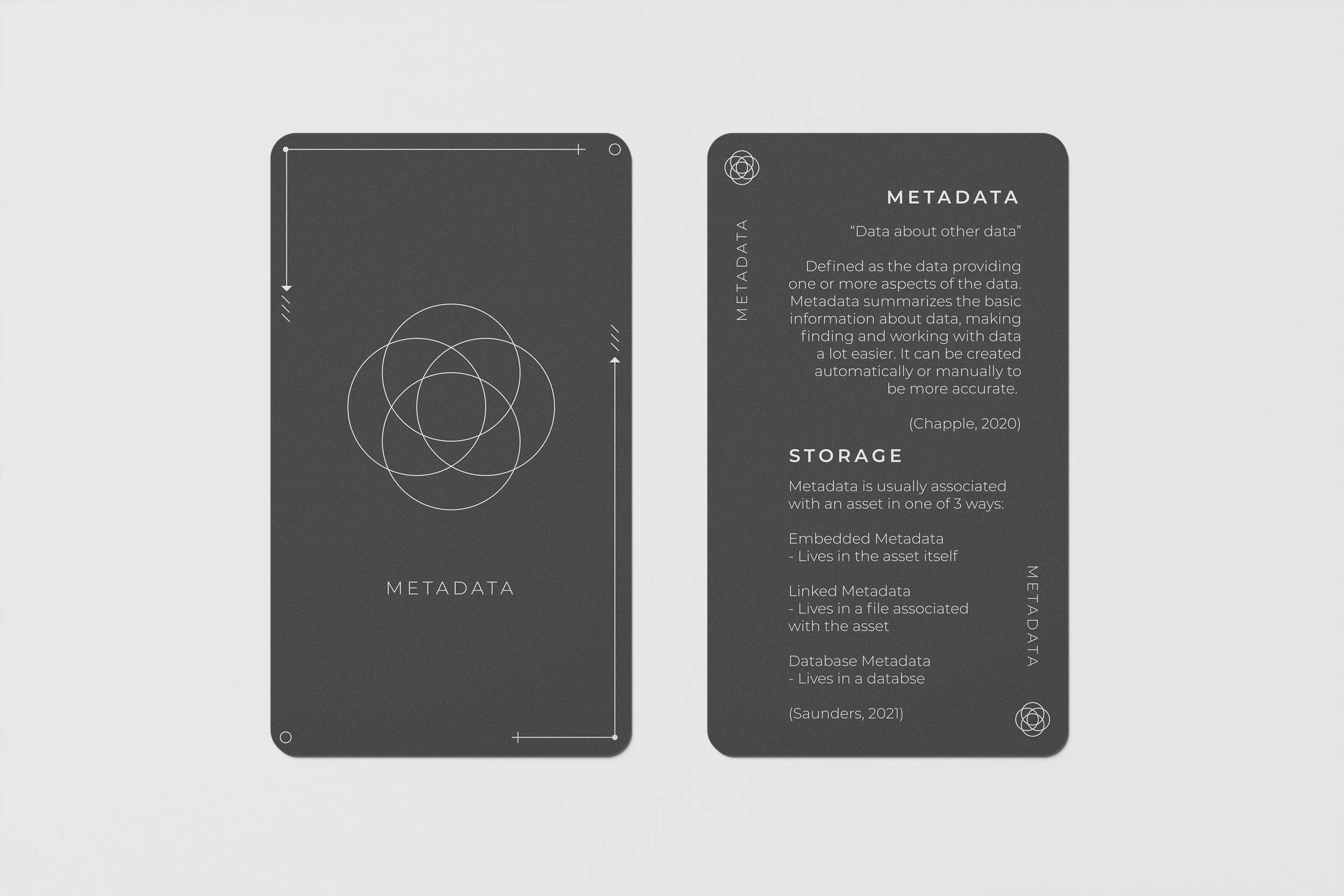
Metadata is a fast-paced recognition card game that rests you on everything that has to do with metadata—what it is, what types of metadata there are and what kinds of data constitutes as metadata.
One circle. All the icons I need.
I used a circle as symbol that metadata encompasses a whole range of data that’s important for any project, big or small. This animation shows how I used once circle to create every icon in the game.

Metadata Logo
I went with a simple and minimalist logo, reminiscent of a quadruple Venn diagram. The use of circles is seen throughout the design of the packaging, cards and iconography of the game. I went with this since metadata has many components that often interact with each other. Metadata is a complex system that interacts and assists with digital asset management software.

Metadata Type Icons
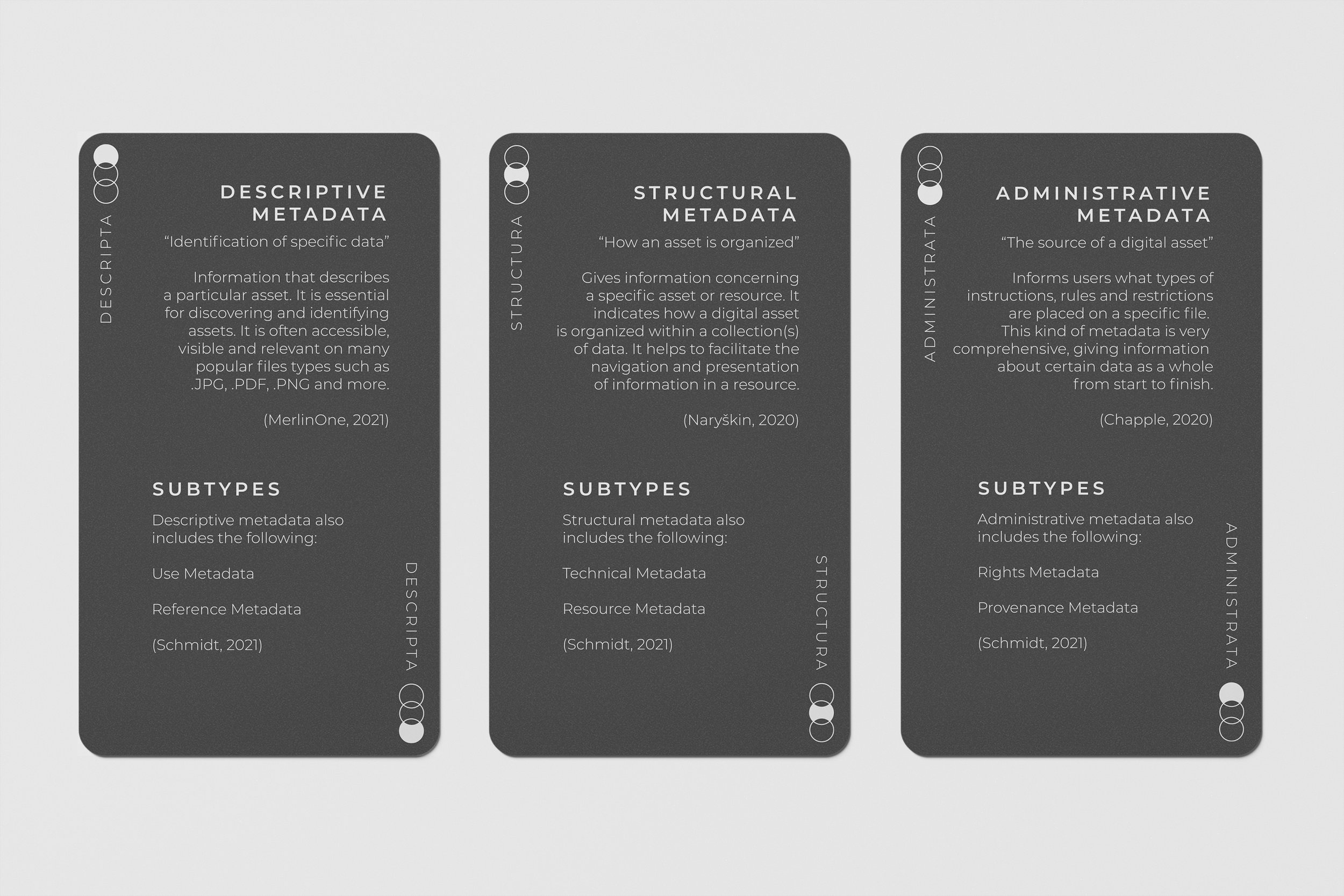
Going along with my use of circles to represent data relation and interaction, I arranged the circles in a way to show that metadata is often categorized into 3 general types—descriptive, structural and administrative metadata. While different types of data can fall into more than 1, the game uses types of data that is accepted as part of only one of these categories.

The Data Icon
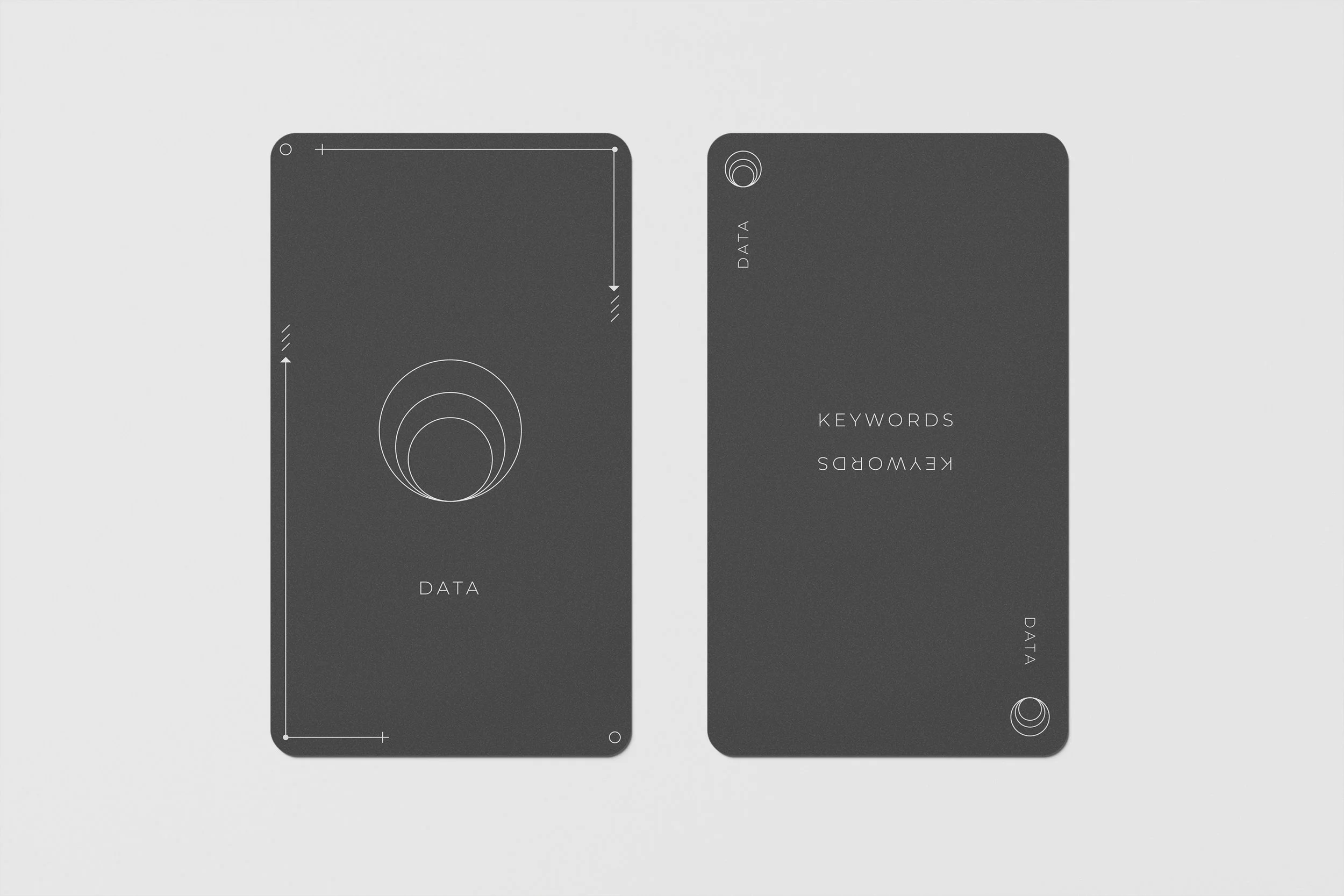
Going along with my use of circles to represent data relation and interaction, I rearranged and resized the circles to fit inside one another as to represent the varying levels of metadata. Metadata in its simplest form is just data. This data can belong to a subtype of metadata which falls under one of the 3 aforementioned types of metadata.
The Cards